 How it worksThe top three, every morning
 Schools and trustsWarm for the first bell
 PortakabinOut of hours, from 52% to 30%
 From the blogThe 3am problem
 About GridEdgeSince 2016, on your side
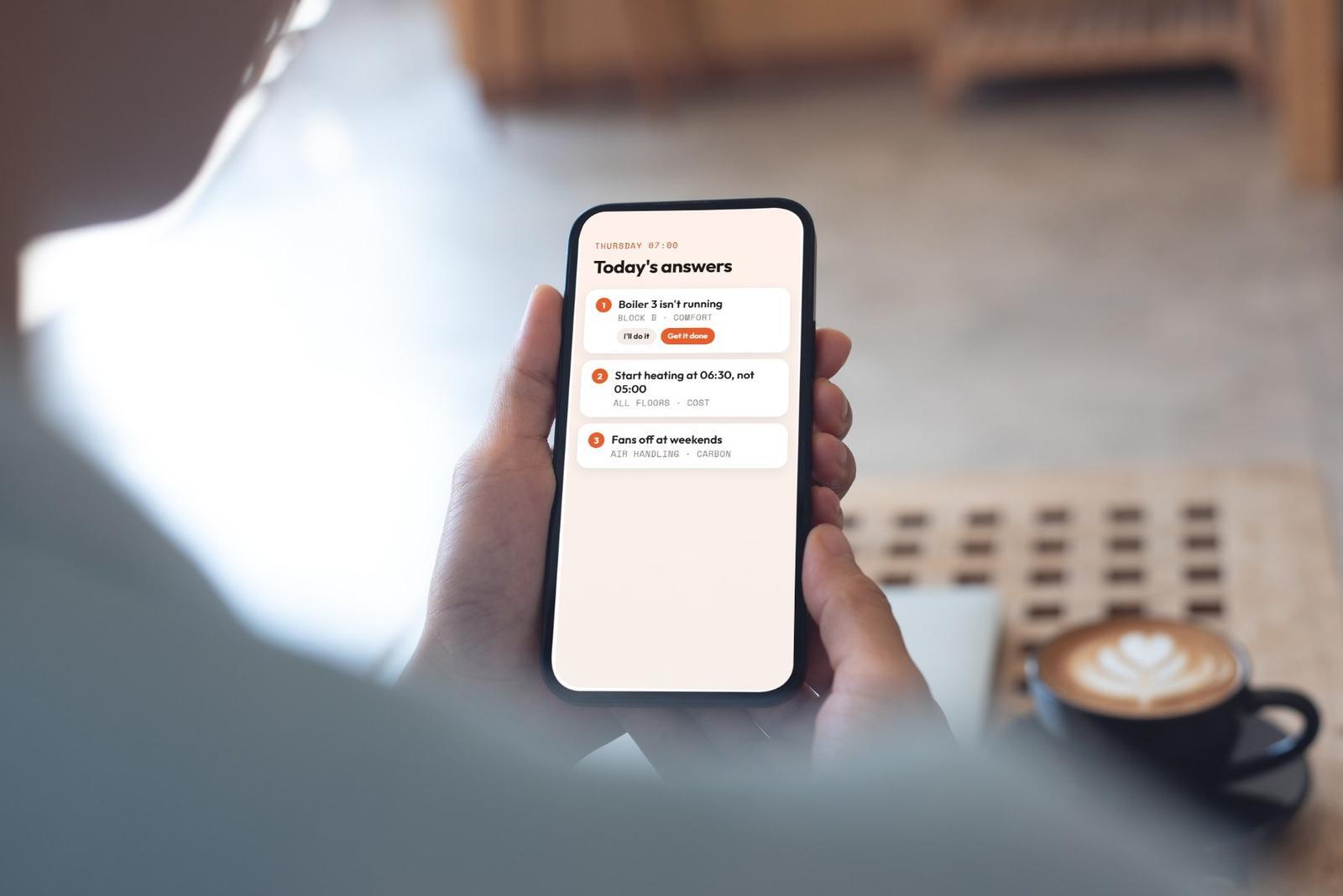
The first hour in a building sets the tone for the day. Someone says their floor is too warm. Someone else says the meeting room is freezing. An alarm list sits waiting, and nobody has time to clear it before the first meeting.
That is a normal morning for a lot of facilities teams. The building is busy doing things nobody asked it to do, and the team is busy reacting. Adding another chart to that morning rarely helps.
A chart leaves the hard part to you
Energy software has spent years getting better at charts. They show what the building did yesterday, last month or last year. What they don't show is what to do about it. Someone still has to work out what is wrong, where it is, and which job comes first.
That is the slow part, and it lands on the people with the least spare time. So the chart gets opened, nodded at and closed, and the building carries on as before.
That is why our line is "Actions, not analytics." Charts leave you to work out what to do. We give your team the three things to do today, and help get them done.
What the top three look like
GridEdge connects to your building management system (BMS) and your meters, and keeps an eye on all of it so you can get on with your day job. Each morning it turns all of that into one short list: the top three actions that make the biggest difference, ranked by impact.
Each action says what is wrong, where, and what to do first, in plain words. A list on a Thursday morning might read:
- Boiler 3 says on. It isn't running. (Block B, comfort)
- Start heating at 06:30, not 05:00. (All floors, cost)
- Ease cooling off from 4pm to 6pm, when prices peak. (Floors 3 to 5, cost and carbon)
Comfort comes first, then cost, then carbon. A cold block gets sorted before a start time gets moved. And a person checks every action before it reaches you.
If you run more than one building, it is still one list. Each building joins the list when it connects, and the most urgent action comes first.
What makes an action useful
An alert tells you something happened. An action tells you what to do about it. The difference is in three details: what is wrong, where it is, and what to do first.
Take the first item on that list. "Boiler 3 says on. It isn't running." That one line tells the team that the controls and the plant disagree, which block is affected, and that comfort is at risk. Nobody has to dig through a trend log to work out where to start. Someone can walk to Block B with a clear question.
The second item works the same way for cost. "Start heating at 06:30, not 05:00" names the change, the time and the floors it covers. It can go straight to whoever looks after the controls.
Four choices, and you stay in charge
Every action on the list comes with four options:
- Action it. Your team or a partner makes the change.
- Ask a question. An engineer explains the why.
- Look into it. Park it while you check on site.
- Decline. Tell us why, and we learn your building.
Nothing changes in your building without your yes. Your own team can make the change with the steps laid out, or your FM provider or our partners can do it as part of the contract.
Decline matters as much as the other three. Perhaps the hall is heated late because it is booked, or one floor runs warm on purpose. Telling us why stops the same action coming back, and the list gets closer to how your building is really used.
Finish three, and the next three rise
Three is a number a team can act on before the day gets busy. Three actions, one coffee. When those are done, the next three move up.
That changes the shape of the job. Instead of a long backlog that never shrinks, the team has a short list it can finish. Each day starts with the things that matter most, and the smaller ones wait their turn instead of crowding the morning.
Start with your own building
Running a building is hard. We want to make it simpler: fewer calls, fewer surprises, three actions before nine.
To find out whether your building could save energy, answer six quick questions. It takes about a minute and it is free. See if your building could save energy.